
Mission Timeline
A step-by-step journey of Pakistan’s first human spaceflight mission, from the cooperation agreement to astronaut selection, scientific research, and the final mission.
-
February 2025
PAK–CHINA SPACE COOPERATION AGREEMENT
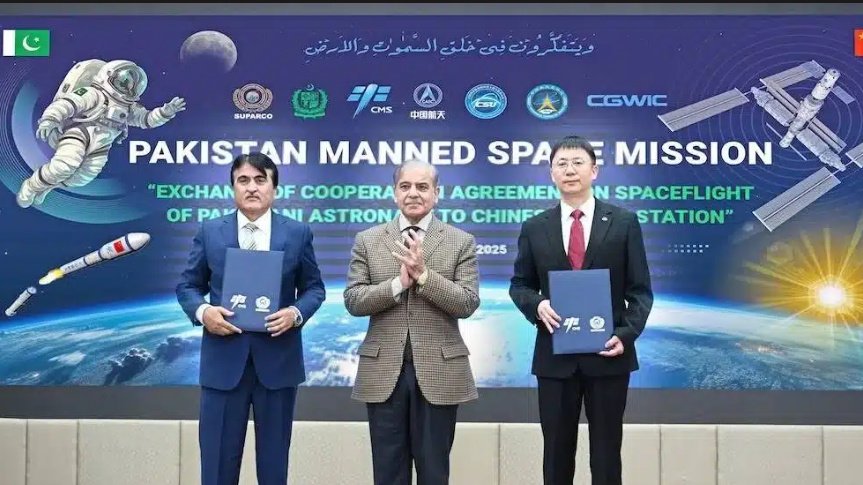
In February 2025, SUPARCO and the China Manned Space Agency (CMSA) signed a cooperation agreement in Islamabad on the selection and training of Pakistani astronauts and their participation in a flight mission to the China Space Station.
Prime Minister Shehbaz Sharif witnessed the exchange of the agreement. Under it, SUPARCO and CMSA jointly selected two Pakistani candidate astronauts for training at Astronaut Centre of China (ACC), Beijing. On completion of training one Pakistani is undertaking spaceflight to China’s Tiangong Space Station. The agreement made Pakistan the first country to take part in China’s crewed spaceflight programme.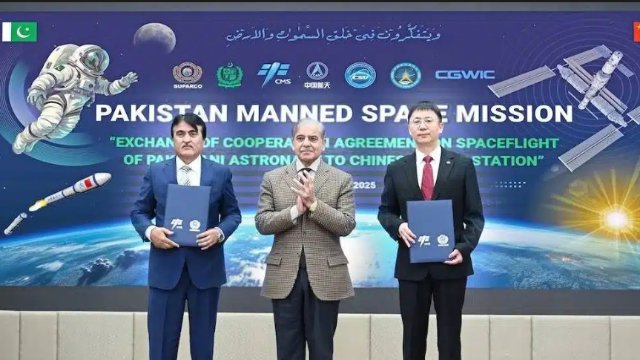
-
April 2026
Selection & Training of Astronauts
The astronaut selection was conducted in close consultation and coordination with CMSA in three stages: preliminary selection, secondary selection and final selection.
The preliminary selection was carried out in Pakistan which included extensive medical and psychological tests. Following preliminary selection, shortlisted candidates underwent medical, psychological, physiological and aptitude evaluations at Astronaut Centre of China (ACC), in line with international human spaceflight standards.
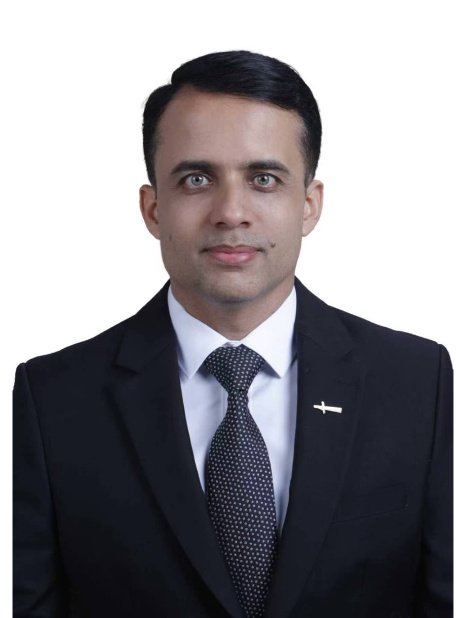
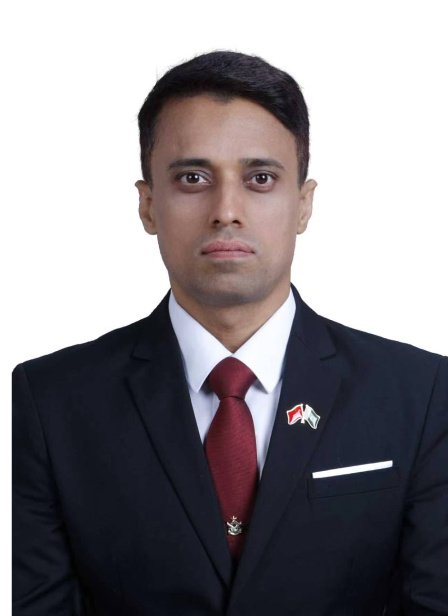
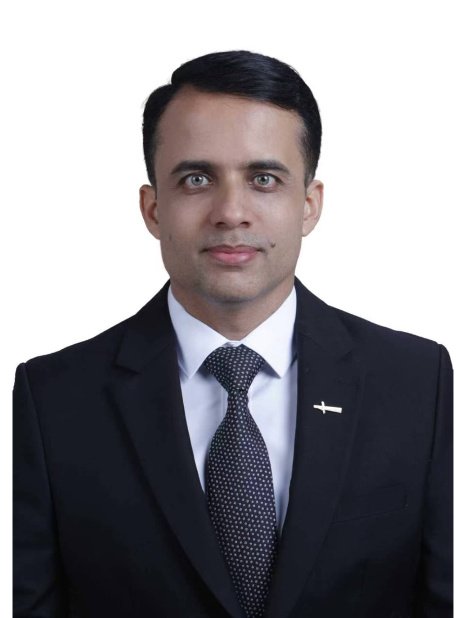
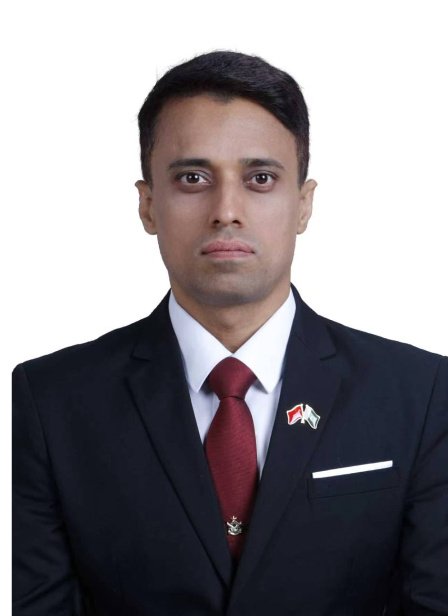
These evaluations led to the selection of two candidates for formal training namely, Muhammad Zeeshan Ali and Khurram Daud.
In April 2026, the two shortlisted candidates departed for ACC to begin professional astronaut training at ACC as “Payload Expert”. They were trained alongside their Chinese counterparts.
-
SCIENTIFIC EXPERIMENTS AND RESEARCH
SUPARCO issued a nationwide call inviting scientists, researchers and students from academia and research institutions to contribute experiments to the country’s first human spaceflight mission. The call generated more than 300 proposals, and experiments were selected through a rigorous three-stage review based on scientific merit, novelty, socio-economic relevance and feasibility. They span materials science, seed technology, crop improvement, biosciences/biotechnology and fluid physics.
Experiment 1: Hybrid Composite Shield
Experiment 2: Self-Healing in Space
Experiment 3: Quinoa Beyond Earth
Experiment 4: Green Life Beyond Earth
Experiment 1Hybrid Composite ShieldExperiment 2Self-Healing in SpaceExperiment 3Quinoa Beyond EarthExperiment 4Green Life Beyond Earth -
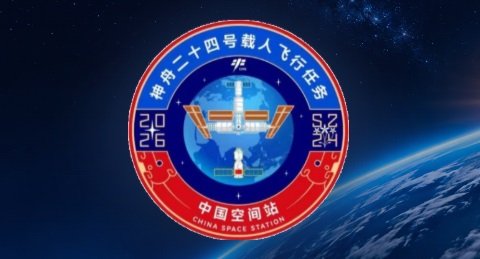
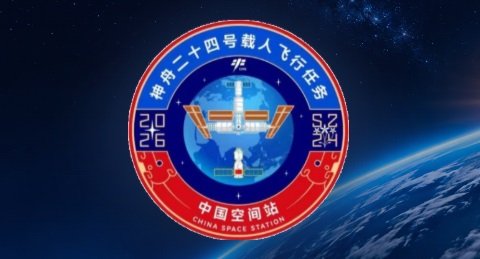
SHENZHUO 24- THE OFFICIAL MISSION LOGO
A mission patch is a cloth badge designed for a spaceflight crew, and it serves as a visual summary of their journey.
The China Manned Space Agency (CMSA) officially released the Shenzhou-24 mission patch on Saturday, 7 November 2026.
On the same day, it announced that a Pakistani astronaut would join the crew. Shenzhou-24 marks the 18th crewed Chinese spaceflight and the 24th flight of the Shenzhou programme.
The spacecraft carries three astronauts on the 12th crewed flight to the Chinese Space Station. Shenzhou-24 is the first joint flight of Chinese and foreign astronauts in China's crewed space programme.
In the logo, white jasmine flowers, Pakistan's national flower, represent Pakistan. They symbolise the historic partnership and friendship between China and Pakistan in this landmark spaceflight.
-
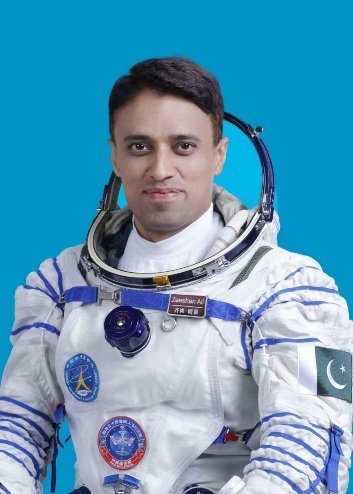
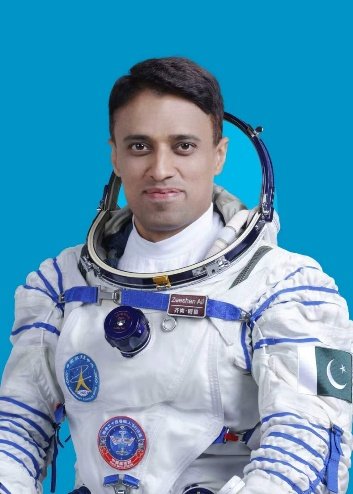
MUHAMMAD ZEESHAN ALI: PAKISTAN'S FIRST ASTRONAUT
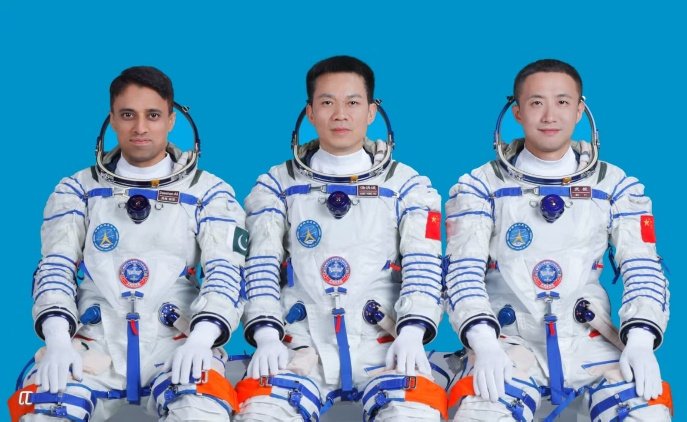
The China Manned Space Agency (CMSA) announced the three-person crew for the Shenzhou-24 mission on Tuesday, 24 November 2026, at a press conference at the Jiuquan Satellite Launch Centre.
CMSA spokesperson Zhang Jingbo said that Muhammad Zeeshan Ali would be the first foreign national to visit the Tiangong space station. The crew is led by commander Tang Hongbo, on his second spaceflight, and includes flight engineer Wu Yi, on his first. Zeeshan Ali serves as payload specialist, responsible for running Pakistan's scientific research aboard the station.
His fellow trainee Khurram Daud is the backup astronaut.